
23 October 2026 · inzhener.moscow editorial team
Remove the danger first, then record the details
For an ongoing leak, contact the emergency or maintenance service. If water is near electrical equipment, do not touch wet appliances, wiring or the distribution board, or try to take measurements yourself. Preserving materials for a dispute must not delay actions necessary for people's safety and limiting damage.
Record when the leak was discovered, when the service was called, when specialists arrived and what actions were taken. If photographs or video could be taken safely before intervention, retain the originals. If initial photography was impossible, state this explicitly. A later photograph shows the condition at the time it was taken; it does not automatically reconstruct the start of the incident.
Distinguish the water source from the damaged finishes
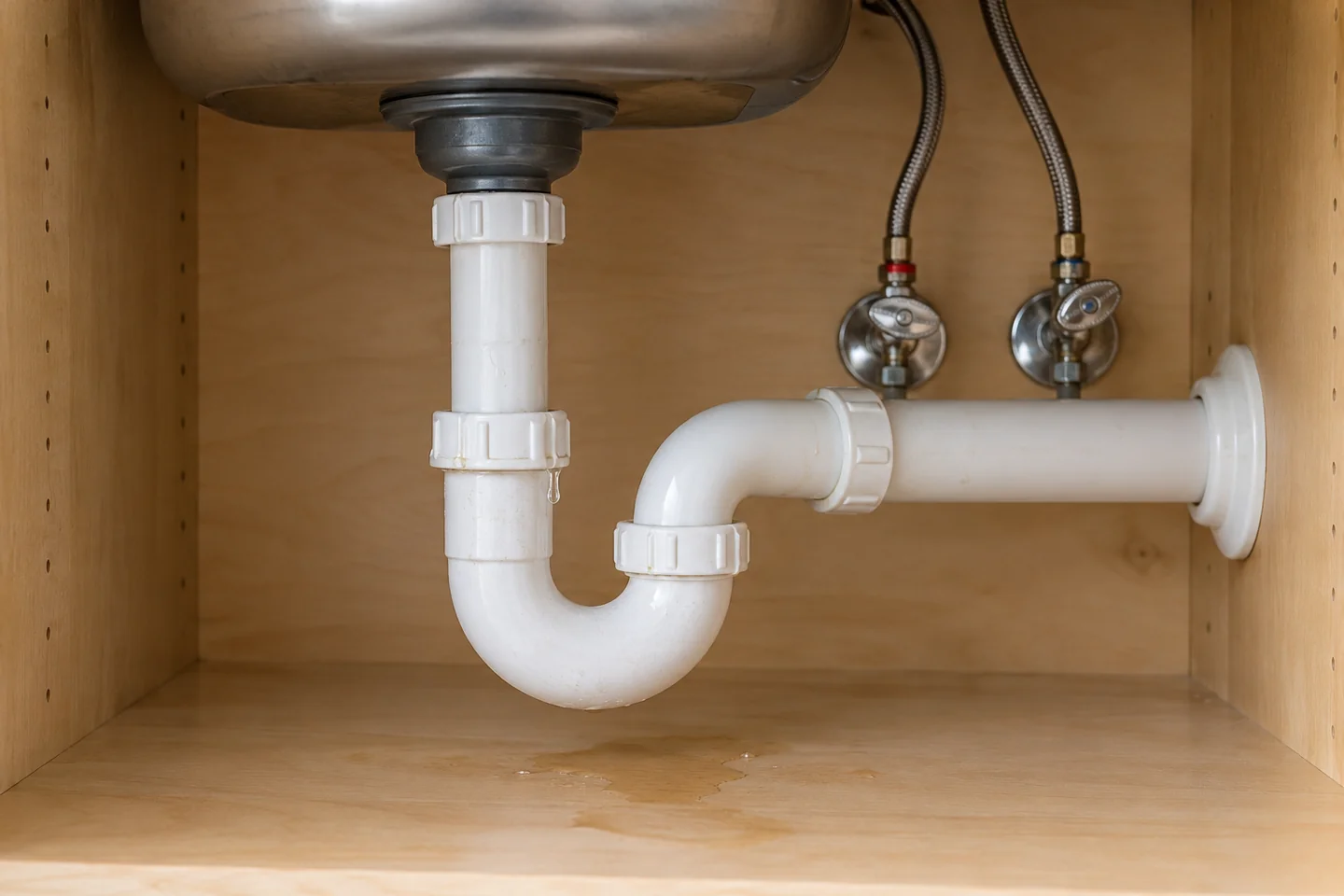
A ceiling stain identifies where the leak manifests, but not necessarily where water leaves the system. For the examination, it is useful to describe the suspected source, possible route of spread and damage found separately. Water can travel along floors and junctions, so a single close-up of a stain is insufficient to establish the cause.
Mark wet areas, accessible pipework, plumbing fixtures and the location of recent work on a room plan. Include overall photographs that show how the components are arranged. If several explanations exist—a pipe connection, drainage, equipment, waterproofing or another source—do not rule them out solely because repairs were completed recently.
Establish what the repair work involved
The contract, scope of work, estimate, completion records, material and equipment documents, as-built diagrams and photographs of concealed work will be needed if available. It is important to establish which component was repaired, which elements were replaced and which existing elements were retained. The general description ‘bathroom repairs’ does not show the boundaries of intervention in an engineering system.
- Dates and a list of completed work linked to rooms and components.
- Models, dimensions and markings of installed elements.
- Connection diagram and photographs taken before concealment by finishes.
- Inspection, testing and commissioning records stating the operating conditions.
- Comments made at handover and information about their resolution.
- Subsequent servicing, alterations and fault reports.
If concealed-work records are unavailable, their absence is considered when planning the inspection. This alone does not describe the quality of a connection or prove the incident mechanism. The expert will need to determine what can be established from accessible traces and whether an agreed opening-up of structures is necessary.
What to record during an inspection
Photograph overall views, the relative positions of elements and close-ups of connections, cracks, leak traces and markings. It is useful to number photographs and link them to points on the plan. State the inspection date, system condition and known changes: the water was shut off, a component replaced, the room dried or finishes already removed.
Where possible, preserve removed components safely. In an accompanying note, record where they were located, who removed them and when, how they were removed and to whom they were handed over. Do not clean surfaces or dismantle a damaged connection merely to obtain a more striking photograph: intervention may destroy signs important to the examination.
Which measurements help and what their limits are
The specialist selects methods according to the object and task: inspection of accessible components, moisture measurement, examination of concealed sections or a check of system operation. The need for testing, permissible operating conditions and safety arrangements are determined before testing. Do not independently raise pressure or repeatedly activate a failed component to support an explanation.
A thermal image reflects the surface temperature distribution. A temperature anomaly may identify an area for further checking, but does not by itself confirm the presence of water, let alone a particular cause of leakage. Results are compared with other observations and, where required, moisture measurements.
When submitting measurements, retain the records, original files and information about the instrument, locations and inspection conditions. A single final image with a colour scale but no method description is difficult to assess. It is also important to know whether measurements were taken before or after drying: different object conditions must not be silently combined into one picture.
If the maintenance organisation has switching logs, service requests or system inspection records, request information relevant to the event. It helps compare the leak's timing with actions involving the system. The absence of an entry, however, does not establish that no operating changes occurred.
Questions for an expert about the cause of a leak
- Where is the source of water ingress and how does the water spread?
- Which system defects were identified and which observations support them?
- Is there a technical connection between the work performed and the established leak mechanism?
- Which alternative causes were checked and which data allow them to be assessed?
- Which conclusions are limited by component replacement, drying, lack of access or missing original documents?
An enquiry need only describe the event briefly and list the available materials. It is important to disclose in advance what has already been repaired and which components have been retained. This helps arrange an inspection and distinguish ascertainable technical circumstances from assumptions about the responsible person or the amount claimed.